Zubní nit: Jak ji používat, proč je důležitá a co o ní všichni zapomínají
When it comes to cleaning your teeth, most people think brushing is enough. But zubní nit, tenký vlákno používané k čištění prostor mezi zuby, kde kartáček nedosáhne. Also known as zubní niti, it is the only tool that physically removes zubní plak from between teeth and under the gumline — the exact spots where zubní kámen starts forming and dásně begin to bleed. If you skip it, you’re leaving up to 40% of tooth surfaces dirty. And no, rinsing with mouthwash or using a water flosser alone doesn’t cut it — those help, but they don’t replace the mechanical scraping that dental floss provides.
Why does this matter? Because zubní nit isn’t about aesthetics. It’s about stopping the silent destruction happening right under your gums. Plaque that stays between teeth turns into tartar in just 24–72 hours. Once it’s hardened, only a dentist can remove it. And that’s when inflammation starts — red, swollen gums, bad breath that won’t go away, and eventually, bone loss around the tooth. You won’t feel pain at first. That’s the trap. By the time it hurts, the damage is often irreversible. Studies show people who floss daily have 40% less gum disease over 10 years compared to those who don’t. It’s not magic. It’s physics: no plaque = no tartar = no inflammation.
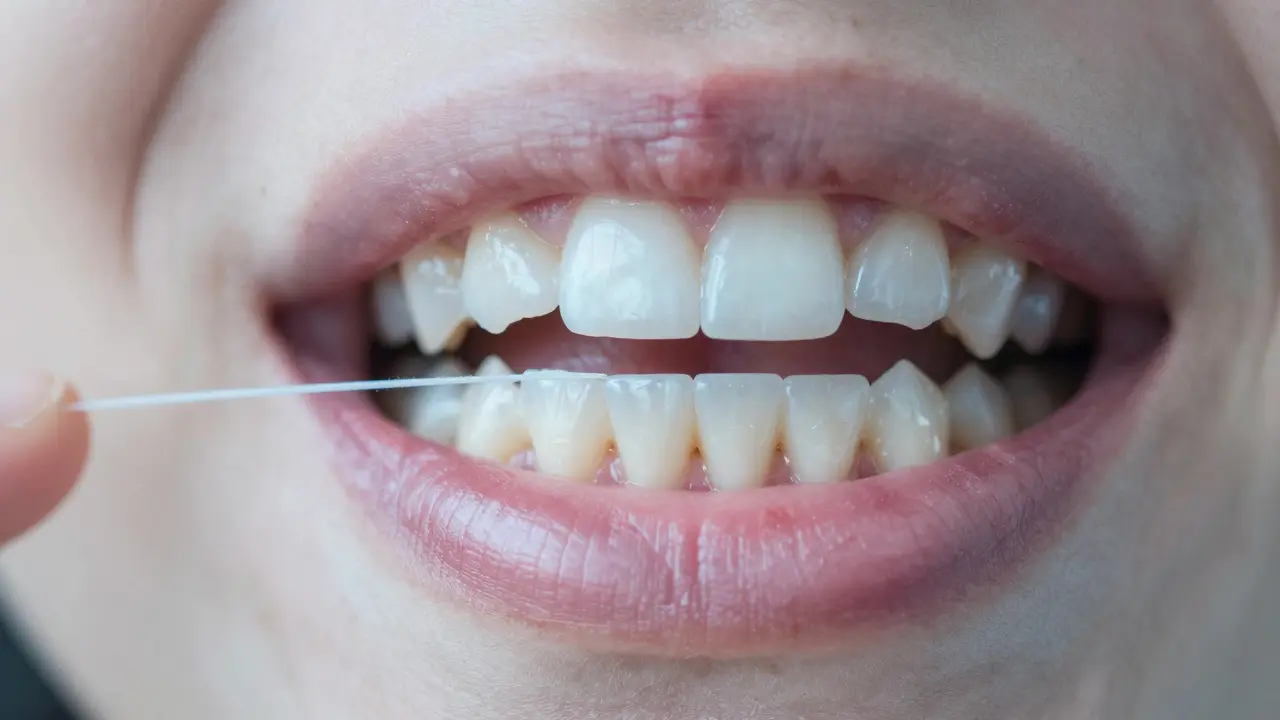
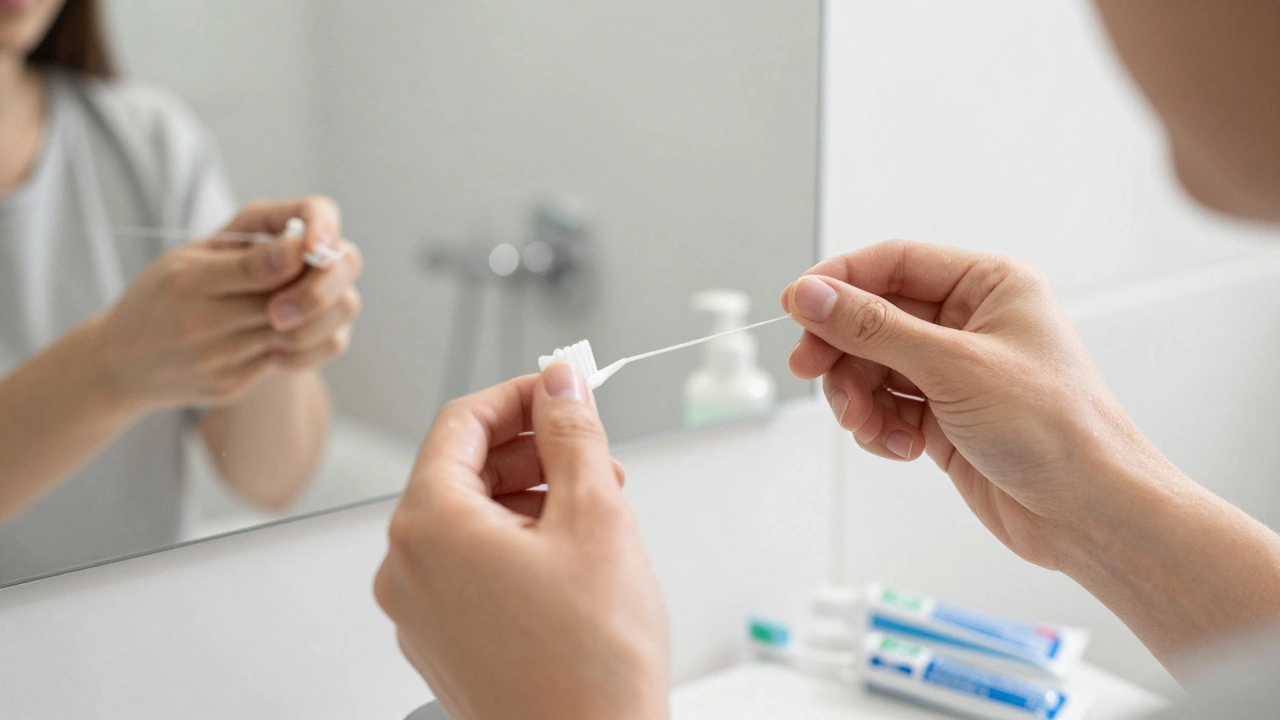
So how do you actually use it right? Don’t just shove it between your teeth and pull. Wrap it around your index fingers, leave about 2 cm of slack, and gently slide it down to the gumline. Curve it into a C-shape around each tooth and move it up and down — not back and forth. Do this for every tooth, including the back ones. If it bleeds at first, that’s your gums screaming for help. Keep going. The bleeding stops in a week or two. If it doesn’t, see a hygienist. And yes, it’s okay if you’re not perfect. Even flossing three times a week cuts your risk of gum disease in half. The goal isn’t perfection — it’s consistency.
What about those fancy floss picks or water flossers? They’re better than nothing, but they’re not as effective. Picks don’t let you curve the floss properly around the tooth. Water flossers flush debris away but don’t scrape off sticky plaque like floss does. Think of it like washing dishes: a rinse won’t remove baked-on grease. You need the scrub. Same with your teeth.
You’ll find articles below that explain how to spot early signs of gum disease, why home remedies won’t remove tartar, and how to use a dental mirror to check your own gums. You’ll also learn what really causes black tartar, how plaque turns into something far worse, and why even the best toothpaste can’t replace floss. This isn’t about being perfect. It’s about understanding what actually works — and doing it, even if it’s just a little each day. Your gums won’t thank you today. But five years from now, they’ll be glad you started.
Jak předejít mezizubnímu kazu: praktické kroky, které skutečně fungují
Mezizubní kaz je nejčastější příčinou ztráty zubů, ale je téměř vždy předchůditelný. Zjisti, jak správně používat zubní nit, co vybrat jako pastu a proč kartáček nestačí.
Jak se vyhnout mezizubnímu kazu: Praktické kroky od zubaře
Mezizubní kaz je nejčastější příčinou ztráty zubů, ale lze ho účinně předcházet. Zjistěte, jak správně čistit mezizubní prostory, které nástroje použít a proč fluorid je klíčový.
Oblíbené příspěvky